OPINION:
Potiskum LGA Eyes@muhammadnuraibrahim848393
11 days ago
Libya’s Collapse and the Price Africa Still Pays - By Mal. Ibrahim M. Nura
Africa did not choose the war in Libya, yet Africa has lived with its consequences ever since.
More than a decade after the fall of Muammar Gaddafi, Libya remains a defining fault line in Africa’s security story. What was promoted internationally as a decisive intervention has, over time, revealed itself as a turning point that unleashed instability far beyond Libya’s borders—and left Africa to manage the fallout.
The collapse of the Libyan state was not just a political event; it was a security rupture. Institutions vanished, borders weakened, and vast arsenals of weapons were left without control. Those weapons did not stay in Libya. They flowed across the Sahel and into West and Central Africa, strengthening armed groups, criminal networks, and extremist movements. Conflicts intensified, states became overstretched, and insecurity took on a regional character that still defines much of Africa today.
This outcome was neither accidental nor unpredictable. African leaders, through the African Union, warned that dismantling Libya without an African-led transition would destabilize the region. They urged caution, dialogue, and reform over destruction. Their warnings were ignored. Decisions were taken in distant capitals, but Africa became the place where those decisions found their consequences—in displaced populations, rising violence, and weakened national security.
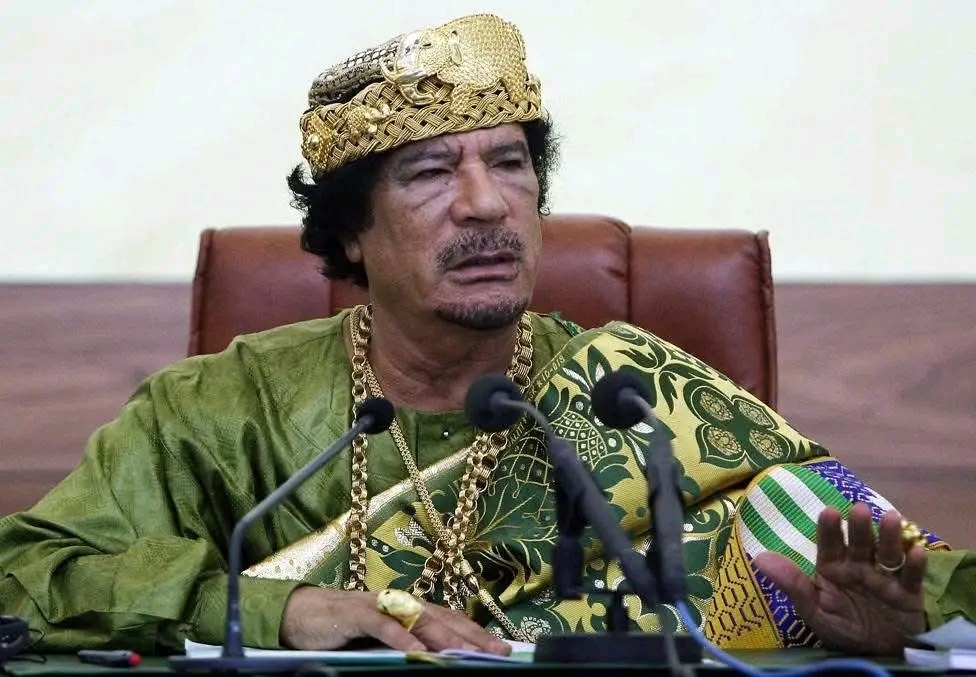
This is not an argument for glorifying the past or excusing authoritarianism. Gaddafi was a controversial figure, and Libya was far from a model state. But there is a reality the global conversation often avoids: destroying a state without safeguarding its institutions is far more dangerous than reforming a flawed one. In Libya’s case, the vacuum left behind did not create freedom—it created disorder, and that disorder crossed borders.
Today, Africa’s struggles with terrorism, arms trafficking, and transnational violence cannot be honestly examined without acknowledging Libya as a critical turning point. Its collapse reshaped the continent’s security environment in ways that continue to cost lives and undermine stability.
Libya should not be remembered as a closed chapter. It should be remembered as a warning. When Africa’s voice is sidelined in decisions that shape its future, instability becomes inevitable. Until African security is approached with African leadership at its core, the continent will continue to carry burdens it did not choose.
Libya fell once. Africa has been living with the consequences ever since.
Mal. Ibrahim M. Nura
Journalist, Writer, and Media Text-Critics.