
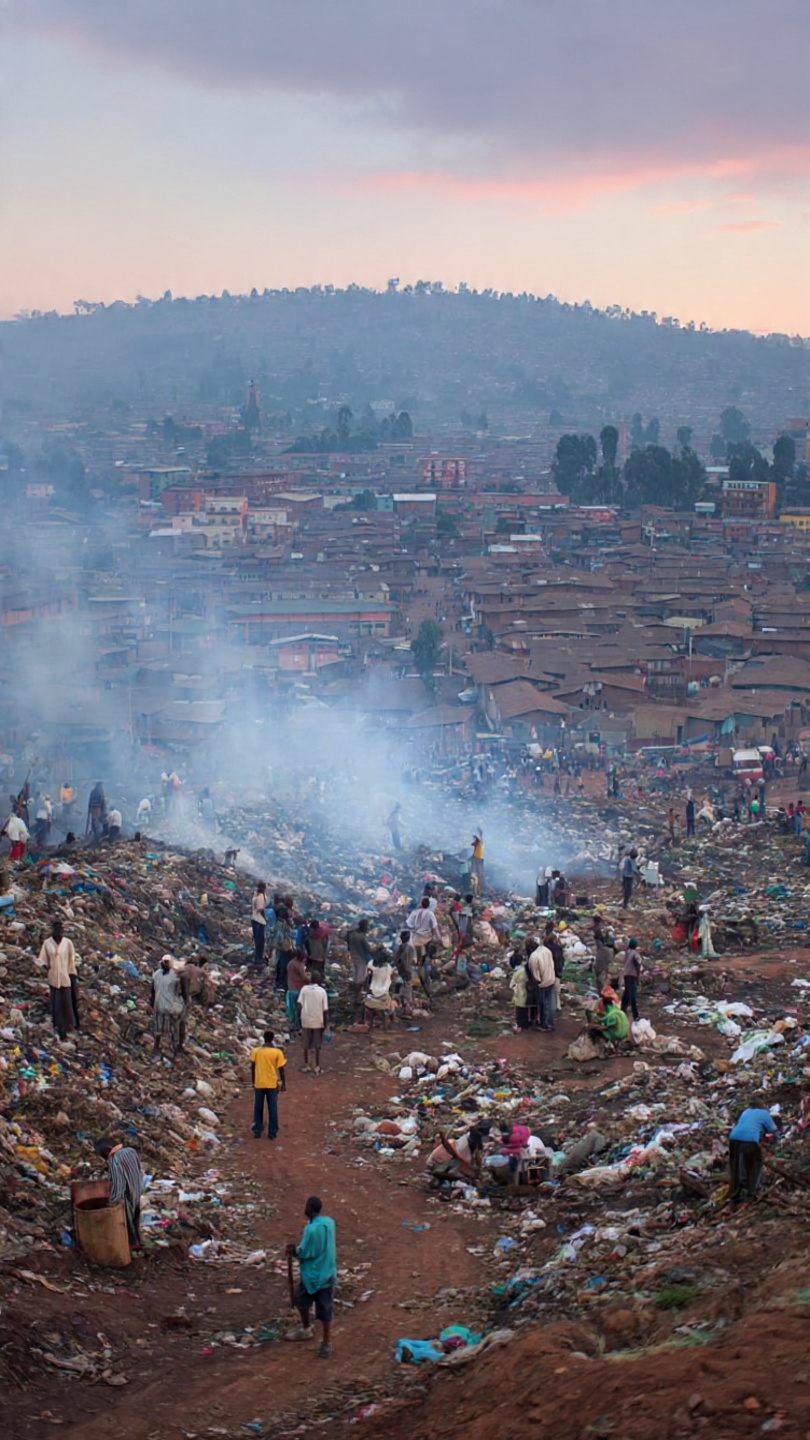
The African Town That Turned Trash Into Jobs, and a Blueprint for Climate Survival
NNOLI SYLVESTER CHIKELUE@sylvesternnoli140312
4 months ago
📍Cape Town, South Africa
The African Town That Turned Trash Into Jobs, and a Blueprint for Climate Survival
In a world choking on plastic and drowning in climate anxiety, salvation may not come from global summits or billion-dollar pledges. It may come from a town that decided its garbage was not waste, but opportunity.
In southwestern Cameroon, the coastal city of Limbe once faced a crisis familiar to many African communities: mounting plastic waste, clogged drainage systems, youth unemployment, and seasonal flooding intensified by climate change.
Today, parts of that same city are rewriting the story.
From Plastic Pollution to Plastic Value
Like many urban centers across Africa, Limbe’s rapid population growth outpaced its waste management infrastructure. Plastic bags blocked waterways. Floodwaters carried debris into homes. The beaches, once magnets for tourism, became dumping grounds.
Yet within this crisis emerged a local movement of environmental entrepreneurs, youth groups, and small recycling enterprises that asked a different question:
What if waste could finance survival?
Community-led initiatives began collecting plastic bottles and sachets, the ubiquitous water and beverage packaging that dominates African streets. Instead of burning or burying them, they sorted, shredded, and repurposed the materials.
Plastic waste became:
Interlocking paving bricks
Fence posts
Construction tiles
Affordable building materials
Each bag picked up became both an environmental intervention and an economic transaction.
Climate Adaptation, Built from the Ground Up
Flooding in coastal cities like Limbe is not accidental; it is climate-amplified vulnerability. When drains are blocked, heavy rain, sintensified by global warming, turn into urban disasters.
By clearing plastics from waterways, local recyclers were not just cleaning streets. They were performing climate adaptation.
Across Africa, similar patterns are emerging. In Kenya, innovators have turned plastic waste into durable bricks. In Nigeria, youth-led recycling hubs now employ hundreds while reducing landfill pressure. In Ghana, waste recovery projects are integrating informal waste pickers into formal green economies.
But Limbe’s lesson is deeper than recycling. It is about decentralised resilience.
Jobs in a Climate-Constrained Future
Africa has the youngest population in the world. Each year, millions enter the labour market. Meanwhile, climate change threatens agriculture, fisheries, and informal economies that traditionally absorb labour.
Green micro-enterprises offer an alternative pathway:
Waste collection cooperatives
Recycling startups
Plastic-to-construction ventures
Upcycling artisan networks
These models create jobs that simultaneously reduce emissions and build adaptive infrastructure.
In Limbe, waste collectors, once marginalised, now operate as climate actors. Their labour reduces methane emissions from dumpsites. Their recycling reduces demand for virgin plastic production. Their products support affordable housing.
This is not charity. It is circular economics in motion.
The Informal Sector: Africa’s Hidden Climate Engine
For decades, international climate frameworks overlooked Africa’s informal sector. Yet it is this sector that often innovates fastest.
Unlike top-down donor projects that fade when funding dries up, grassroots waste initiatives are market-driven. Plastic has value. Clean streets reduce flooding. Recycled bricks sell.
The result? Self-sustaining adaptation.
As global leaders debate net-zero targets, towns like Limbe quietly practice survival economics.
A Blueprint the World Is Missing
There are three reasons this model matters globally:
1. It Connects Climate and Employment
Too often, climate policy is framed as sacrifice. In Limbe, climate action equals income.
2. It Is Scalable
Any town with plastic waste, which is to say, nearly every town, can replicate the model.
3. It Centers Local Ownership
Communities are not passive victims of climate change; they are architects of response.
If supported with micro-financing, technical training, and policy backing, such initiatives could expand dramatically across the continent.
What Governments and Donors Often Miss
Large-scale waste management contracts frequently exclude informal collectors. Imported recycling technologies sometimes fail because they are not adapted to local realities.
Limbe’s success shows that climate resilience is not only engineered in laboratories, it is negotiated in markets, workshops, and community meetings.
The future of climate survival in Africa may depend less on billion-dollar climate pledges and more on empowering the citizens already building solutions from the ground up.
Beyond Limbe
The town’s transformation is not perfect. Challenges remain: inconsistent municipal support, funding gaps, and limited scaling infrastructure.
But perfection is not the lesson.
The lesson is proof of concept.
When waste becomes currency, unemployment becomes enterprise, and vulnerability becomes innovation, a new narrative emerges: Africa is not merely on the frontlines of climate crisis, it is on the frontlines of climate solutions.
And perhaps the world should be paying closer attention.

































































































































14 days ago