A World Without the Brake: How Khamenei’s Exit Could Turn a Regional Crisis Into a Global Shock —By Mal. Ibrahim M. Nura
Potiskum LGA Eyes@muhammadnuraibrahim848393
1 month ago
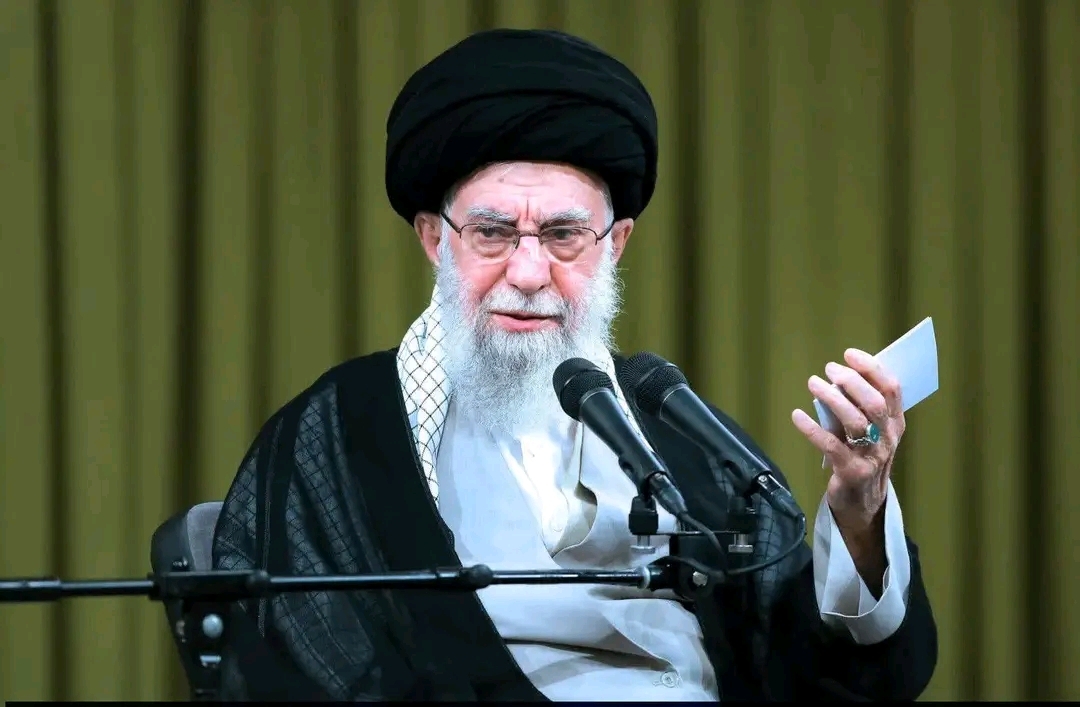
For decades, Ali Khamenei functioned as the ultimate stabilizer inside Iran’s power system. Agreement with his ideology was irrelevant to his real role: he was the brake. He understood escalation, feared irreversible mistakes, and governed with long-term survival in mind rather than short-term emotion.
With his death, that restraint is no longer assured—and the implications reach far beyond Iran or the Middle East.
Iran is strategically realistic; it knows it cannot defeat a conventional military coalition led by the United States and Israel in open warfare. But Iran has never measured power by conventional victory; its doctrine is built on endurance, asymmetry, and the ability to spread pressure across time, space, and systems.
That is where the global risk lies.
Iran does not need to win a war to change the world—it only needs to disrupt it. Any serious escalation could threaten the Strait of Hormuz, a lifeline for global energy supply. Even limited instability would spike oil prices, accelerate inflation, weaken fragile economies, and ripple through food, transport, and manufacturing chains worldwide. From Asia to Europe, from Africa to the Americas, ordinary citizens would feel the cost.
Khamenei often prevented Iran from crossing points of no return. He allowed pressure but avoided ignition. Without him, internal dynamics may shift. Younger, more militant elements—particularly within the Islamic Revolutionary Guard Corps—may see restraint as vulnerability. Their logic may favor deterrence through confrontation, not patience.
If escalation becomes policy, the effects will be global. Shipping insurance rates would surge. Trade routes could be disrupted. Cyber operations could target financial systems and infrastructure well beyond the region. Proxy conflicts could intensify, pulling in new states and multiplying flashpoints.
Perhaps most dangerously, the precedent matters. The world is watching. If restraint is seen as weakness and escalation as protection, global behavior will change. Militarization will accelerate. Arms races will intensify. International norms—already fragile—will erode further.
This is why the post-Khamenei moment is uniquely perilous. The Middle East’s instability no longer stays regional; it is embedded in global systems. Energy, trade, finance, and security are now inseparable.
Khamenei spent years containing the fire.
The question now is not only what Iran will do but also whether the world is prepared for what happens if that fire is no longer contained.