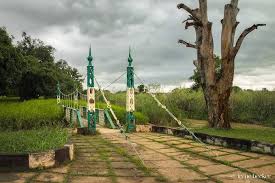
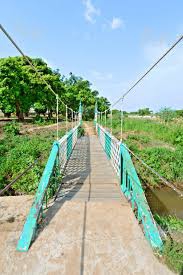
Explore the historic Pedestrian Bridge: The Lord Lugard Footbridge, Kaduna.
History African@africanhistory
1 year ago
The Lord Lugard Footbridge, located in Kaduna, the capital city of Kaduna State in Nigeria, is a historic pedestrian bridge that stands as a testament to the colonial era's architectural and engineering prowess. Constructed in 1904 by Sir Frederick Lugard, who was instrumental in the amalgamation of Northern and Southern Nigeria into one country in 1914, this bridge serves not only as a functional structure but also as a significant historical landmark.
Originally built in Zungeru, which was then the capital of the Northern Protectorate, the bridge was reconstructed in 1920 after being moved to Kaduna. This relocation coincided with Kaduna becoming the new administrative headquarters for the Northern region. The footbridge was declared a historic monument by the National Commission for Museums and Monuments on February 16, 1956, recognizing its importance in Nigeria's colonial history.
Made primarily of iron, the bridge features handrails and wire gauze for safety, with beams, pillars, girders, and concrete providing structural integrity. Its dimensions are approximately 14.2 meters in length and 1.75 meters in width, designed to accommodate pedestrian traffic. The bridge's construction was a marvel for its time, especially given the harsh environmental conditions of West Africa, and it still stands in good condition today, thanks to occasional maintenance.
Currently situated in General Hassan Katsina Park, the bridge provides a picturesque crossing over what was once part of the Kaduna River or its tributaries. It's easily accessible to visitors who can explore this piece of history when visiting the park. The area around the bridge has become a popular spot for tourists, historians, and locals interested in Kaduna's rich historical narrative.
The footbridge is more than just a structure; it's a symbol of the colonial administrative efforts in Nigeria and the physical embodiment of the transition from traditional to modern infrastructure. It serves as an educational tool, offering insights into colonial engineering, the life of Sir Frederick Lugard, and the early 20th-century development of Nigeria.
Visiting Tips:
Photography: The bridge offers a unique photo opportunity, especially for those interested in capturing historical architecture.
History: Visitors are encouraged to learn about Sir Frederick Lugard and the amalgamation of Nigeria, enhancing the experience of the visit.
Safety: As with any historical site, visitors should respect the structure and follow any posted guidelines or restrictions.
The Lord Lugard Footbridge remains a key element of Kaduna's historical landscape, inviting tourists to walk in the footsteps of history while appreciating the engineering achievements of colonial times.
#LordLugardFootbridge #KadunaHistory #NigerianHeritage #ColonialEngineering #HistoricalSites #VisitKaduna #KadunaLandmarks #ColonialArchitecture #CulturalTourism #HistoricalMonument #NigeriaHistory #ExploreNigeria
Photo Credit: Naija Photo Stock