OPINION;
Potiskum LGA Eyes@muhammadnuraibrahim848393
1 month ago
America’s Shadow Game: Religion as a Cover for Nigeria’s Resource Control -By Mal. Ibrahim M. Nura
(Writes from Nigeria.)
There is a new kind of war being fought today—not with bombs or bullets, but with narratives. The United States, once the undisputed master of global oil politics, is now struggling to maintain its grip on the world’s energy map. With Saudi Arabia, Iran, and even Russia forming new partnerships under the BRICS alliance, Washington’s dominance in the Middle East has weakened, forcing it to look elsewhere for influence.
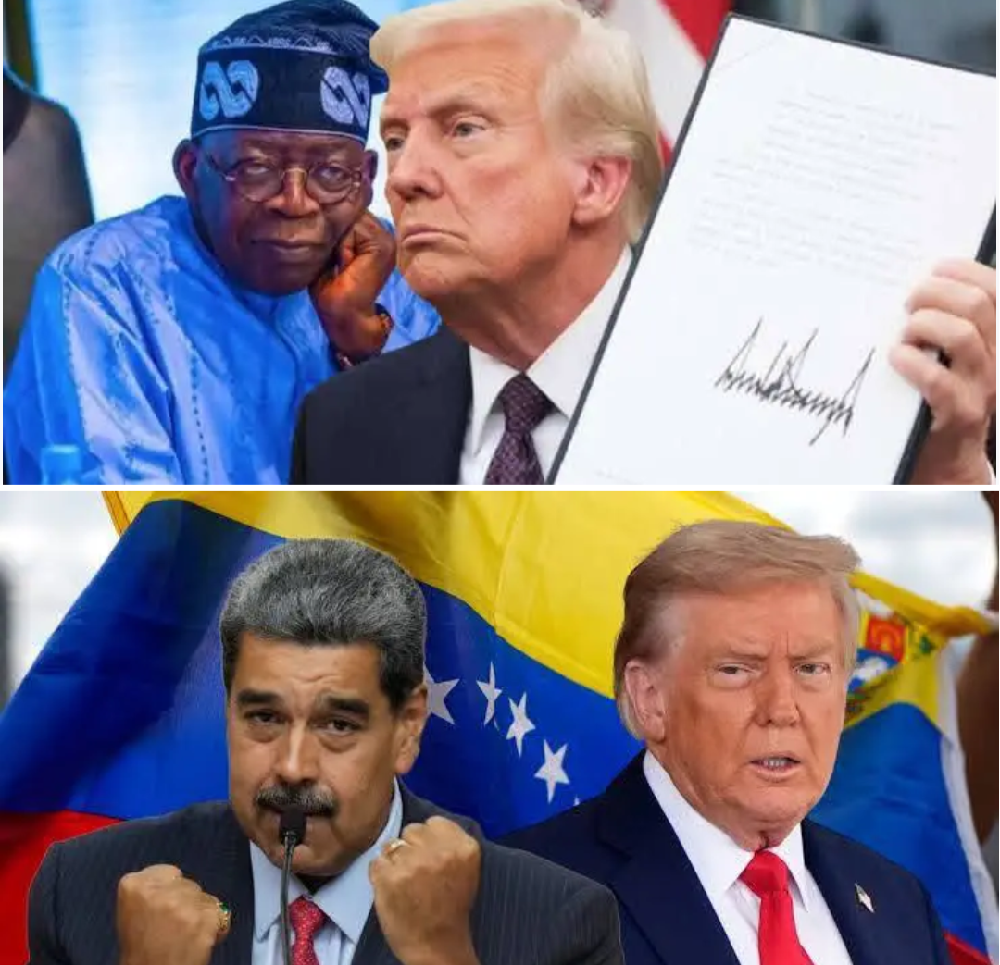
When America loses control of one region, it searches for another. That is why Venezuela and Nigeria—two energy-rich nations unwilling to surrender their sovereignty—are now in Washington’s sights. Venezuela, which holds the world’s largest proven oil reserves, has long resisted U.S. efforts to dictate its policies. Despite Washington’s claims about drug trafficking and human rights abuses, the underlying motive has always been about oil and power.
President Nicolás Maduro has repeatedly argued that America’s campaign against his country is not about justice but domination. From sanctions and economic strangulation to military posturing near Venezuelan waters, the United States has deployed every tool to subdue a nation that insists, "Our resources belong to us."
Now, that same playbook is being rewritten for Nigeria—though the narrative has changed. Instead of “dictatorship” or “drug trade,” the United States now invokes religion. By placing Nigeria on its “Country of Particular Concern” list, Washington claims it is defending Christians from persecution. It sounds noble—but behind that moral façade lies a calculated mission: to secure control over Nigeria’s oil, gas, lithium, and other critical minerals vital to the global green energy transition. Whoever controls these resources will control Africa’s economic future—and Washington understands this well.
In recent months, American politicians have increasingly used religion as a political weapon to interfere in Nigeria’s domestic affairs. Senator Ted Cruz’s proposed bill to “protect Christians in Nigeria” is widely seen as a soft instrument of political leverage. Even more disturbing was former President Donald Trump’s reckless call for an “invasion” of Nigeria—under the false pretext of stopping a Christian genocide. Such dangerous rhetoric not only misrepresents Nigeria’s complex realities but also threatens our fragile unity by painting national security issues as a religious war.
Let us be clear: Nigeria’s problem is terrorism, not theology. From Borno to Benue, both Muslims and Christians have suffered under the brutality of violent extremists driven by ideology, poverty, and desperation—not by faith. To reduce this complex national tragedy to a “religious conflict” is both false and harmful. It validates extremist propaganda, undermines peacebuilding, and weakens national cohesion.
America’s so-called defense of religion in Nigeria, therefore, is less about compassion and more about control. When Washington speaks of “freedom,” it often means the freedom to exploit. When it speaks of “protecting Christians,” it often masks a deeper agenda—securing access to strategic minerals and maintaining geopolitical influence. We have seen this tactic before. From Iraq to Libya, moral rhetoric has often been used to justify material ambition.
As Africa becomes central to the global green energy revolution, Nigeria is being subtly rebranded as the next humanitarian project. The real goal, however, is economic domination.
Nigeria must not fall for this trap. Our greatest weakness is not religion, but division. When we allow external powers to define our challenges, we surrender control over our destiny. The Nigerian government must engage with international partners—including the United States—from a position of strength and dignity, not dependency. Friendship should be guided by mutual respect, not subservience.
Equally important, Nigeria must take ownership of its narrative. When others define who we are, they also decide what we deserve. Our story should not be one of conflict but of resilience, diversity, and immense potential. We must invest in public diplomacy, international media engagement, and strategic communication to ensure the world hears Nigeria’s truth from Nigerian voices.
Venezuela’s experience serves as a warning. When a nation insists on controlling its natural wealth, global powers often brand it as “unstable” or “undemocratic.” What follows are sanctions, isolation, and sometimes covert destabilization. Nigeria must not allow that pattern to repeat itself on African soil.
The time has come for Nigeria to guard its sovereignty with wisdom and unity. Our leaders must act with foresight, ensuring that foreign partnerships align with national interests—not foreign ambitions.
In the end, America’s narrative of “religious freedom” in Nigeria is a shadow game — a moral mask concealing material motives. The real battle is not between faiths, but between freedom and control, between sovereignty and subjugation.
Nigeria must remain vigilant, united, and self-reliant in this new era of global competition. Our destiny cannot be dictated from abroad; it must be shaped, owned, and defended by Nigerians themselves—with courage and conviction.
Mal. Ibrahim M. Nura
Public Affairs Analyst and Commentator on African Geopolitics
Contacts:
📞 081****7684 / 080****6873
✉️ i**************@gmail.com






1 month ago
27 days ago
16 days ago
6 days ago